Our Approach
BCCP has always taken a passionate approach in communicating with people and implementing projects keeping in mind that

BCCP Strategic Plan
Strategic Communication is the core through
which BCCP envisions a society where everyone
will be healthy, poverty-free, and will

Our Flagship Brandings
BCCP has designed, developed and implemented several first-ever public health service
promotional Branding strategies and

Major Partners
BCCP has been maintaining strong partnership with the Government of Bangladesh (GoB). At the
same time, we attract funding

The Story Behind Of Our Movement
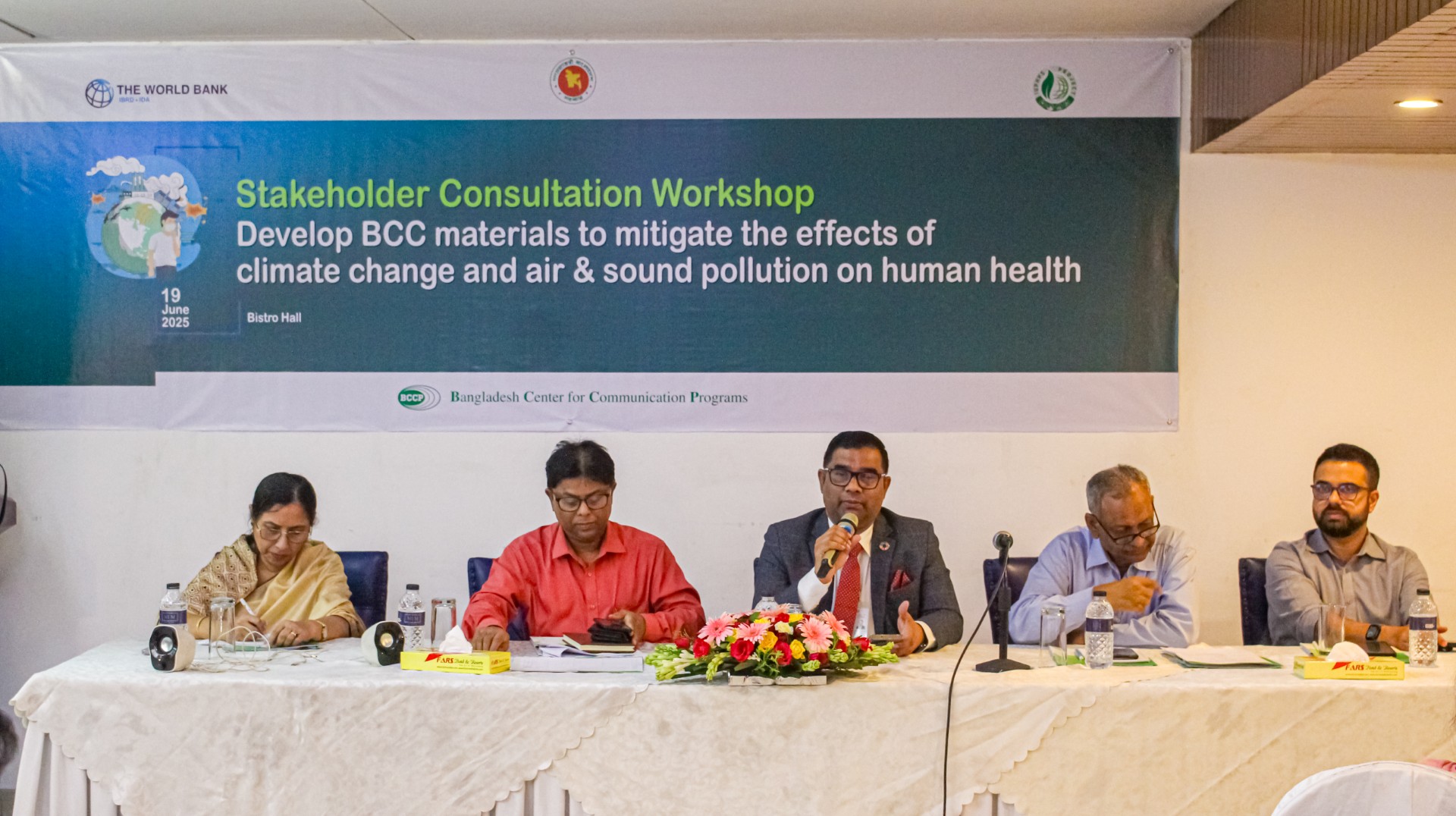
The Bangladesh Center for Communication Programs (BCCP) is a non-profit, non-governmental organization based in Dhaka that specializes in strategic communication for social development. Established in 1996 as the successor to the Johns Hopkins Bloomberg School of Public Health Center for Communication Programs (CCP), it designs and implements large-scale behavior change communication programs
Our Digital Interventions
eToolkit, Online SBCC Material Approval (OSMA) eLearning Courses, GIS Dashboard
Our Programs and beneficiaries
There are no better advocates than satisfied clients and beneficiaries, and BCCP has always placed high importance on their satisfaction which has made it possible to complete and continue the numerous programs in different fields for hundred thousand of beneficiaries across the country